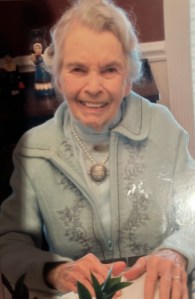
Mary Clayton Wyche Wintz, Hallsboro, N.C. (1918-2025)
Last week one of North Carolina’s most esteemed educators, Mary Clayton Wyche Mintz, passed away. She died at the age of 106 in the home where she was born in Hallsboro, Columbus County, N.C.
Ms. Mintz taught school for more than half a century. For 25 years, she taught English at Hallsboro High School in her hometown.
She was a dedicated and deeply gifted teacher. In 1981, she was named North Carolina’s Teacher of the Year.
I came to know her through her work with Kin’Lin’, an absolutely fabulous journal of Columbus County’s history and folklore.
Ms. Mintz and her students at Hallsboro High published Kin’Lin’ from 1975 to 1985. For her students, I know that producing the journal had to have been a rich and rewarding experience.
For scholars like me, Kin’ Lin’ remains a treasure. Every time I pick up an issue, I learn something new.
When I read those old issues of Kin’ Lin’, I always say a quiet thank you to Ms. Mintz and her students. They did not have to take the time to listen to their community’s elders, and they did not have to go to the trouble of preserving their stories– but so many of us are grateful that they did.
In honor of Ms. Mintz, I would like to re-print here an article from Kin’ Lin’ that I found in my files. Published almost 50 years ago, the article focuses on a Waccamaw-Siouan woman named Nettie Freeman Patrick.
Ms. Patrick visited Ms. Mintz’s Kin’ Lin’ students in the spring of 1977. During that visit, she talked especially about the origins of Buckhead, a Waccamaw-Siouan community northeast of Lake Waccamaw.
Today Buckhead is still the homeplace of the Waccamaw-Siouan Indians, known as the “People of the Falling Star.”
* * *
History of Buckhead
From Kin’Lin’ Vol. 1, #5 (Spring 1977)
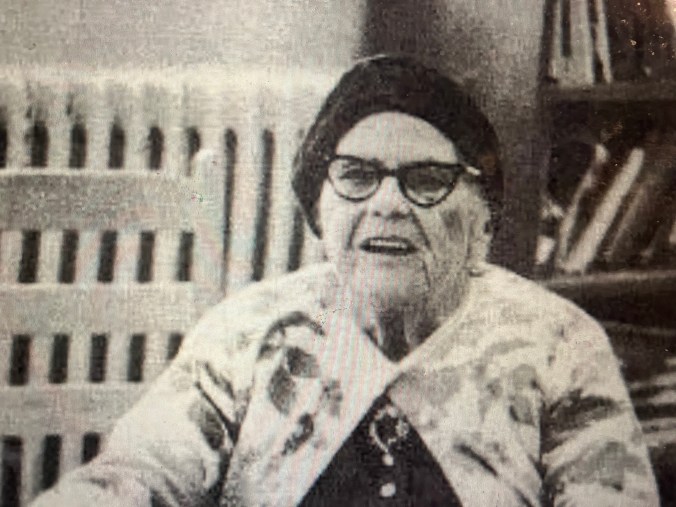
Ms. Nettie Freeman Patrick visiting with Ms. Mintz’s Kin’ Lin’ class at Hallsboro High School, Spring 1977. Photo from Kin’ Lin (Spring 1977)
The history of Buckhead is as interesting as its name. Historical facts and some of the mystique that surround that community were captured on tape when Mrs. Nettie Patrick was interviewed by the Kin’ Lin’ class.
Mrs. Patrick was escorted to the school by two of her granddaughters, Angela Patrick and Treasa Ann Jacobs, both of whom are students at Hallsboro High School.
The history of this unique Indian community was the main subject discussed. The tape was transcribed and edited by Glenda George with some assistance from Jacqueline Jacobs, who is a member of the staff and herself a resident of Buckhead.
Mrs. Patrick was born in 1893 at Buckhead, where she has lived all her life. She was a Freeman before she married Alex Patrick and her mother was a Graham. She is the mother of three sons; Hezzie, Olive, and Gaither; and three daughters: Pauline, Marguerite, and Vera Mae.
She has 32 grandchildren. Vera Mae married Clifton Freeman who is considered the chief of the Waccamaw Siouan tribe. Their daughter is Princess Coo-Coo, who is a member of the North Carolina Commission of Indian Affairs.
Mrs. Patrick’s husband, now deceased, was a direct descendent of the founder of the Buckhead village.
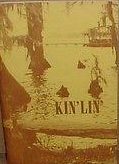
Front cover of an issue of Kin’ Lin’.
Origin of Buckhead
According to Mrs. Patrick, the first person there was “my husband’s granddaddy, Matthew Baldwin. And the reason they call it Buckhead is ‘cause Mr. Council over here at Wananish used to go down there and kill big old deers.
“Him and his brother said they were going to name it Buckhead because they killed those big bucks with them big horns on them. Willie Council and John Pickett Council.”
Some years ago there was a place in Bladen County on the Cape Fear River called Indian Wells where there was a ferry and a landing. It was there that Mrs. Patrick said the first settlers came from Summerville and established a permanent home at Buckhead.
She said, “My mother said that they come on a flat way down yonder near Summerville. Landed down here at Cape Fear River. Down at Milling Spring.
“Didn’t have nowhere to stay, so Mr. Flowers let them stay on his place. He had lots of work to do like picking cotton and helping him on the farm.
“They saved up money to buy land. My mama said they came from over there at Cape Fear River. That’s where the generation of people sprung from.
“I ain’t never been there, but my mama used to know where it was. It’s between East Arcadia and back over there.
“They used to have what they called a milling spring there, and Indian people would go there and dip down and get water.
“That’s before they ever had any houses. They had huts to stay in. My mama said they did. Made out of logs.
“They told me when the Indians first landed over there, they didn’t have no lumber like they got now. They took logs, gouged them, and put up a house just like we do a tobacco barn.
“They worked with Mr. Flowers over there at Cape Fear River. He was kinda wealthy and give them timber to cut boards to put the top on. Top was made out of boards. They used a croze and put in wood and split boards. They won’t no sawmills.
“It was really good water at Milling Spring. Clear, right pretty-like. Washed out of it, they drunk out of it, and cooked out of it.
“And those Indian people, they didn’t have no fireplace like we got now. They took a scaffold and cooked out on that scaffold and took some sticks and made a chimney out of sticks and clay to the little hut.”
Based on the information provided by Mrs. Patrick, the first settler at Buckhead at four children. One son Joe married Eliza Locklear. John married Mary Kipper. Mary married William Patrick, and Ferberee Ann married Curtis Jacobs.
Mary and her husband settled at the old home place. Her baby boy was Alex who married Mrs. Nettie.
She does not remember where the Mr. Jacobs or Mr. Patrick came from. She said, “All of them were Indian people, but they were different. They all stayed together and they all pulled together.”
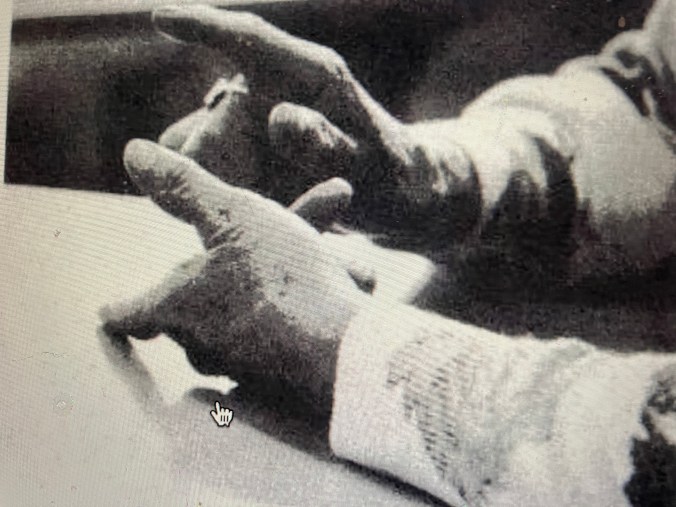
The Kin’ Lin’ story noted how expressive Ms. Patrick was with her hands. Photo from Kin’ Lin’ (Spring 1977)
Agriculture
Buckhead was somewhat like an island surrounded by branches of the Green Swamp which drains into the Waccamaw.
Mrs. Patrick said, “It used to be a big swamp there, but they wanted to have a canal cut in there and that taken the water off. I reckon the water came clean out of Lake Waccamaw.”
Rice and sugarcane could be grown there but not other crops.
She said, “It was very good for rice and ribbon cane. The cane was a big old type. That’s the one you make syrup out of. Couldn’t put cotton close to the creek; it would drown it out.
“If it be a dry year, we could put corn there. We don’t have the regular rains now like we used to have. That’s what we called dog-day rains. If you ever got the corn up high, it wouldn’t hurt it.
“At one time they’d have to go clear to the Green Swamp to plant corn. That was before they got the water off the field.
“They would find a high place in the Green Swamp and plant corn and didn’t have to put a bit of fertilizer to it. It was rich, but we cut that canal through there and that took the water off the land about 30 years ago.
“When they went off to plant corn, they’d be gone for several days. They had a tent place there at Bolton where they’d stay.”
Mrs. Patrick said that they raised livestock on their farm. “They had a no-fence law. Had a wire put from Elizabethtown run all down in here. Called it Bladen and Columbus.
“Bladen over there and Columbus over here on this side.
“You could turn your cows loose and let them go anywhere in the woods in the winter. But in the summer, you’d have to put a chain on them on ‘count of the people planting. Stake them.”
It seems that in Bladen County they had what they called a stock law, which required owners to keep their animals fenced in. In Columbus, the cattle roamed freely.
In spite of that, the cows were easily trained and the farmers were able to keep up with what was theirs.
Mrs. Patrick said, “You could get out there and call them, `Heer up! Heer up! And they’d all come. The hogs could go loose until planting time. We had chickens and big old oxen.”
Mrs. Patrick also talked about clearing new ground: “We used oxen and cutters. We had new-ground cutters. Like a plow. It had a sharp thing on the end of it that would go through it and cut the roots with it.
“Then you take our cultivator and go through it. When you get it full up, you just dump it out. And you take the roots up. And some had just grubbing hoes.
“My husband had about ten acres of cleared land. We had an ox and cart first, a plow and later we got the cutters and the cultivator. You’d just go along with the cultivator. With our pitch forks, we piled up the roots, then dumped and burned them.”
Before they had good roads and electricity at Buckhead, life was very different. Their way of transportation was by horse and two-wheeled carts.
She said, “That’s right. Cedar wheels and some could ride in the buggy. Most of them had home-made carts.
“They didn’t have no paint to paint the wheels. Made the wheels and hubs. You could get line and bridle. Couldn’t get no paint.”
Front over of another issue of Kin’ Lin’.
Ricefield and Rice Planting
Today Ricefield is a residential section of Buckhead, but it was used for rice growing when Mrs. Patrick was young.
Mrs. Patrick said, “The first man who owned it was Dugald Clark. And he sold a lot of it to the Indian people.
“He named that place because they planted rice on it. I can remember how it looked growing, but I didn’t have anything to do with it. The old people done that, you know.
“They would save the seed from year to year. They would have a big old barrel to put your seed rice and keep it.
“Next year you’d go in there and get the seed and drop a little in every hill about that far apart. It would grow up about that high.
“That old bay field was very rich, and you could make pretty rice down there. It would flood the field.
“They would take the rice and strip it and put [it] in mortars and beat it to get the hurd off of it, it would be so pretty and clean. And it was good rice. Sweet.
“This we get now is old, and it don’t taste as good as that right off the bushes. It’s a heap sweeter than that we buy.”
Churches at Buckhead
“The first church was the Baptist church. St. Mark, we called it in them days. Some of the young ones helped, but the old started it. Uncle Joe Freeman and Uncle Archive Jacobs, the oldest; and there was another man, Rev. Dale Graham.
“The first preacher I can remember was John Allen Spaulding. He was from Up Ahead.
“That’s what we called it—Up Ahead, around the St. James community.
“I can remember him preaching there to the members. We had Sunday School, but we didn’t have books like we have now. Just read out of the Bible.
“No song books. Aunt Mary Freeman knew some of the old songs. She was a good singer.
“She would go to all the other churches and sit there and learn the songs. She would sing and teach them at the church.”
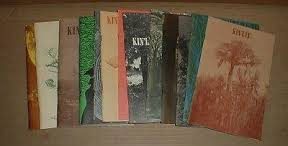
A collection of Kin’ Lin’ issues was recently being sold at at on-line auction site.
Official Recognition as Indians
Mrs. Patrick talked about their efforts to establish their heritage. “Well, I’ll tell you how it was. We all went, as the saying goes, when I was coming along, for colored.
“These children don’t know nothing about that now. But there was a man—Bill Patrick, who stayed Up Ahead in St. James. He went to Raleigh.
“And he come back, and he told lots of them—`You know, we Indian people can get an Indian school and an Indian church if we try.’
“So they all pulled together. That’s how we got an Indian school and an Indian church.
“I was small then. I don’t remember much about it. But my mother did.”
She couldn’t remember the exact date but she said that it was about 1900. She went on to say that it was about 40 years ago when the first steps were taken to have this group of Indians recognized officially as the Waccamaw Siouan.
Schools
Mrs. Patrick said educational opportunities were very limited until the founding of the Wide-Awake Indian School.
She related: “Well, Mr. Archie Clark, a white man, went and got us a three-month school when I was coming along.
“He went to Raleigh somehow or other and came back and told Uncle Joe Freeman that we could have a school down here for three months a year. And so they named it Little Hill.
“That was the only school we had for a long time and for just three months; it really just got started, then they kept raising a little money, and they built one over there in Bladen.
“Aunt Cindy, my husband’s aunt’s sister, was having Sunday School at her house. That was before we got a church. And then Mrs. Bertha Patrick would let us have her house to teach school; the teacher was someone from Pembroke.” (Aunt Cindy was Mrs. Lucinda Jacobs.)
-End-
Locating Kin ’Lin’ can be a bit difficult nowadays, but I often see copies at public libraries and at many university and college libraries, at least here in North Carolina.
You can find Mary Clayton Wyche Mintz’s obituary here.
 David Cecelski
David! This is my mom’s tribe! She was Ruby Freeman. So glad zi ran across this awesomely researched story. Eill read it indepth and keep it for myceesesrch as I write THE LAST FEAR, my next screenplay ( magic realism) based on my personal history and hetitage. You are the bestest. Gratitude.
LikeLiked by 1 person
That’s so cool, Alicia! So glad you found the story! And good luck on THE LAST FEAR! Can’t wait!
LikeLike
I continue to enjoy and appreciate your posts! Thank you for your effort!Sent from my iPhoneMB Alford
LikeLike