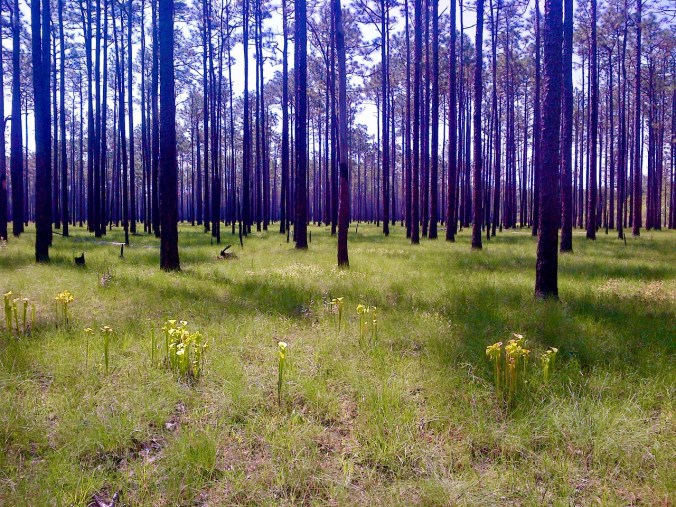
Beginning in the 1970s, the Nature Conservancy began purchasing the pine savannas and pocosin lands that now make up the Green Swamp Preserve. The Preserve is located on Hwy. 211 a few miles west of Supply, N.C. Photo by Tom Earnhardt
I recently asked my friend Tom Earnhardt if he would share some of his wonderful photographs from The Nature Conservancy’s Green Swamp Preserve with me.
I think I just wanted to dwell a bit on one of the beautiful wild places that I hope to visit when this cold weather is gone and spring is here and the wildflowers begin to bloom again.
A gentleman tried and true, Tom not only sent me the photographs, but kindly gave me his permission to share them here today.
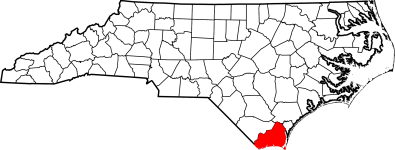
The Green Swamp Preserve is made up of 17,000 acres of largely pocosin and pine savanna in Brunswick County (in red) and Columbus County (just to the west) in the southern most corner of the North Carolina coast. Map, courtesy of Wikipedia
As I’m sure you know, Tom was for many years the creator and host of “Exploring North Carolina,“ WUNC-TV’s very popular weekly television show featuring the glories of our state’s natural heritage.
Over the last half century, Tom has been one of North Carolina’s most dedicated conservationists. Day in and day out, he has devoted himself to protecting our wild places and to deepening our appreciation for them. And as you can see here, he is also a very talented photographer.
I’ve gone here and yon with Tom, but I have never had the chance to go to the Green Swamp Preserve with him.
However, I have long known that he has a special passion for the place. Located in the swampy low country of southeastern North Carolina, the Preserve is made up of pocosin swamps and longleaf pine savannas that are a precious remnant of an ecosystem that once stretched across hundreds of square miles.
Biologists and nature lovers are especially drawn to the Green Swamp Preserve for the abundance and rich diversity of its carnivorous plants and for its wild orchids and other wildflowers, all of which are incredibly beautiful and some of which are quite rare.
“If the The Nature Conservancy had never done anything else, it would have proven its worth just with the Green Swamp Preserve,” Tom once told me. “That’s how important I think it is to preserving North Carolina’s natural heritage.”
The only time that I’ve been to the Preserve was more than 25 years ago now. At the time, I was doing historical research for my book The Waterman’s Song and I just wanted to get a better feeling for the land on which the people I was writing about lived.
What I remember most from that visit are the things that I could never have discovered in old books and manuscripts: the smell of the longleaf pine savannas, the music of the birds and insects, the quality of the light, the feeling of the earth beneath my feet.
I still remember walking across the sphagnum moss, it being so spongy that it made the ground itself feel alive.
Earth, but also sea, or so it felt.
For me the Green Swamp Preserve is an otherworldly place, more precious yet because it is still there when so much is not.
When I first saw Tom’s photographs, my memories– the smells, the sounds, the light, all of it– came back to me in a rush, as real as the day I was there all those years ago.
Tom once wrote me:
“The Green Swamp and our other remaining longleaf pine forests appear to be so simple and `even boring.’ From a distance our savannas appear to be composed of only one kind of tree (longleaf) and one kind of grass (wire grass). But take a closer look, and wow!”
He went on to explain:
“The biodiversity found in these places—rare carnivorous plants, exquisite flowers, and unusual insects and birds—form tight-knit communities in which all things are connected. The success of each living thing is dependent on the success of their neighbors. We have a lot to learn from the land of the longleaf pine.”
I hope you enjoy Tom’s photographs as much as I do.
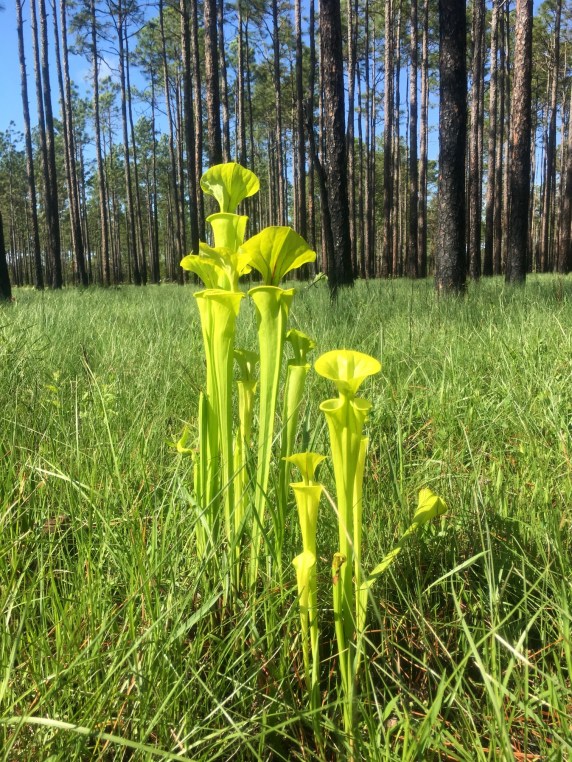
Tom told me that yellow pitcher plants (Sarracenia flavaare) are common throughout the Green Swamp Preserve. They are one of 14 insectivorous plants in the Preserve. “The Green Swamp is the epicenter of insectivorous plants in North Carolina,” Tom explained. The Preserve’s insectivorous plants include large populations of Venus flytraps, sundews, butterworts, bladderworts, and 4 species of pitcher plants. Unlike Venus flytraps, pitcher plants do not close on their prey. Instead, they lure insects down their tubes with nectar, then digest or drown them in fluids. Photo by Tom Earnhardt
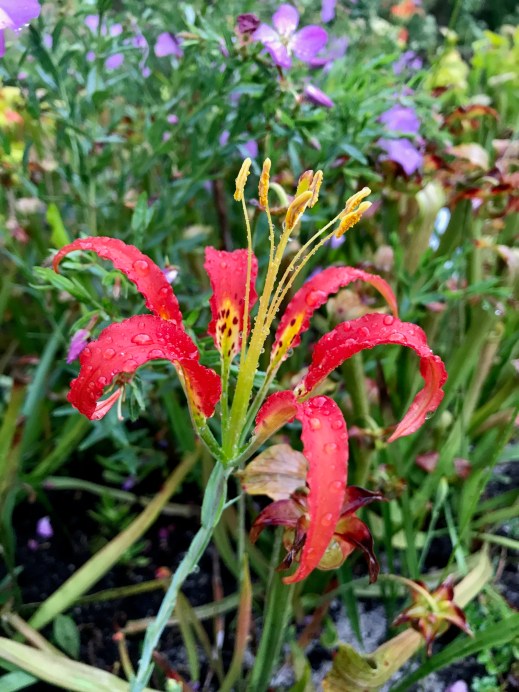
This is one of the wonders that Tom seeks out every year in the Green Swamp. Catesby’s lily (Lilium catesbaei), also known as the pine lily, is found in wet longleaf savannas from North Carolina to Florida. In 1788, a botanist in South Carolina, Thomas Walter, named the lily after the English naturalist Mark Catesby, whose Natural History of Carolina, Florida and the Bahama Islands was the first published account of the flora and fauna of North America. Photo by Tom Earnhardt
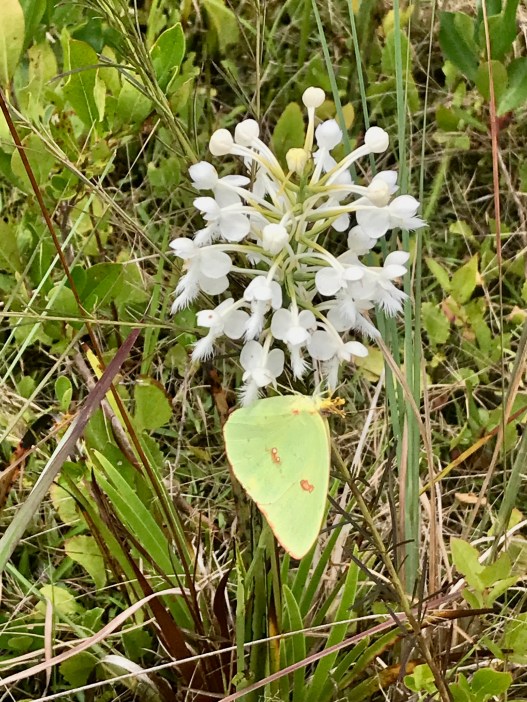
A cloudless sulfur butterfly (Phoebis sennae) on a white-fringed orchid (Platanthera blephariglottis) in the Green Swamp Preserve. Photo by Tom Earnhardt
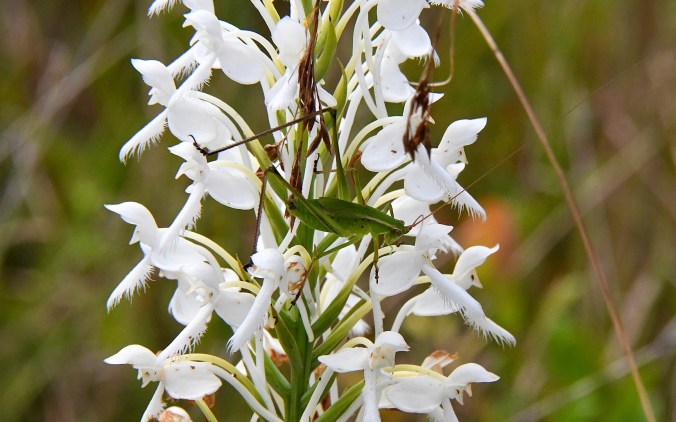
And here we see a katydid hiding out in a white fringed orchid. Photo by Tom Earnhardt
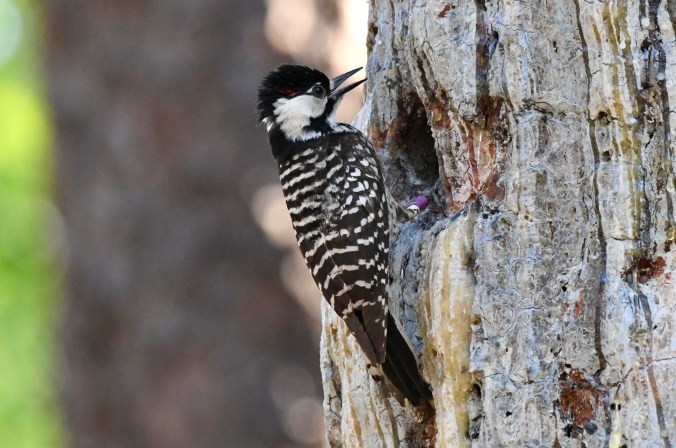
Tom reminded me that the red cockaded woodpecker (Leuconotopicus borealisis) is one of the signature species of North Carolina’s longleaf pine savannas. It plays an especially significant role in the Green Swamp Preserve because it digs its nesting cavity in living trees, creating homes for many other species of birds (including the blue bird below), as well as flying squirrels, the occasional raccoon, insects, and several species of reptiles and amphibians. Photo by Tom Earnhardt
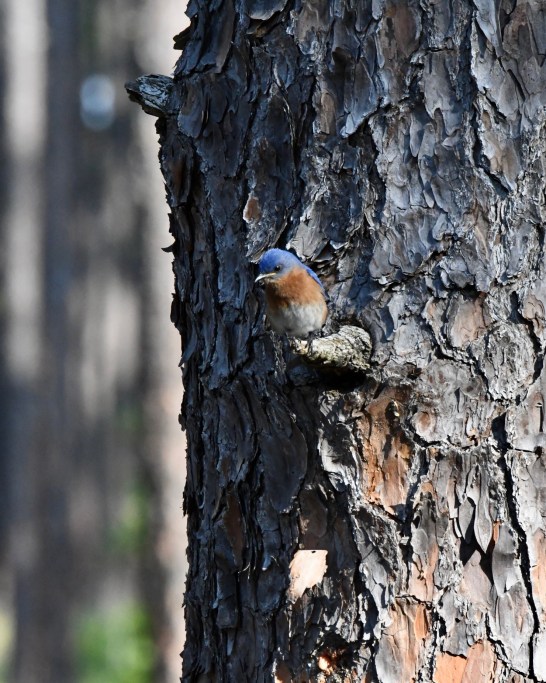
A bluebird in the Green Swamp Preserve. Photo by Tom Earnhardt
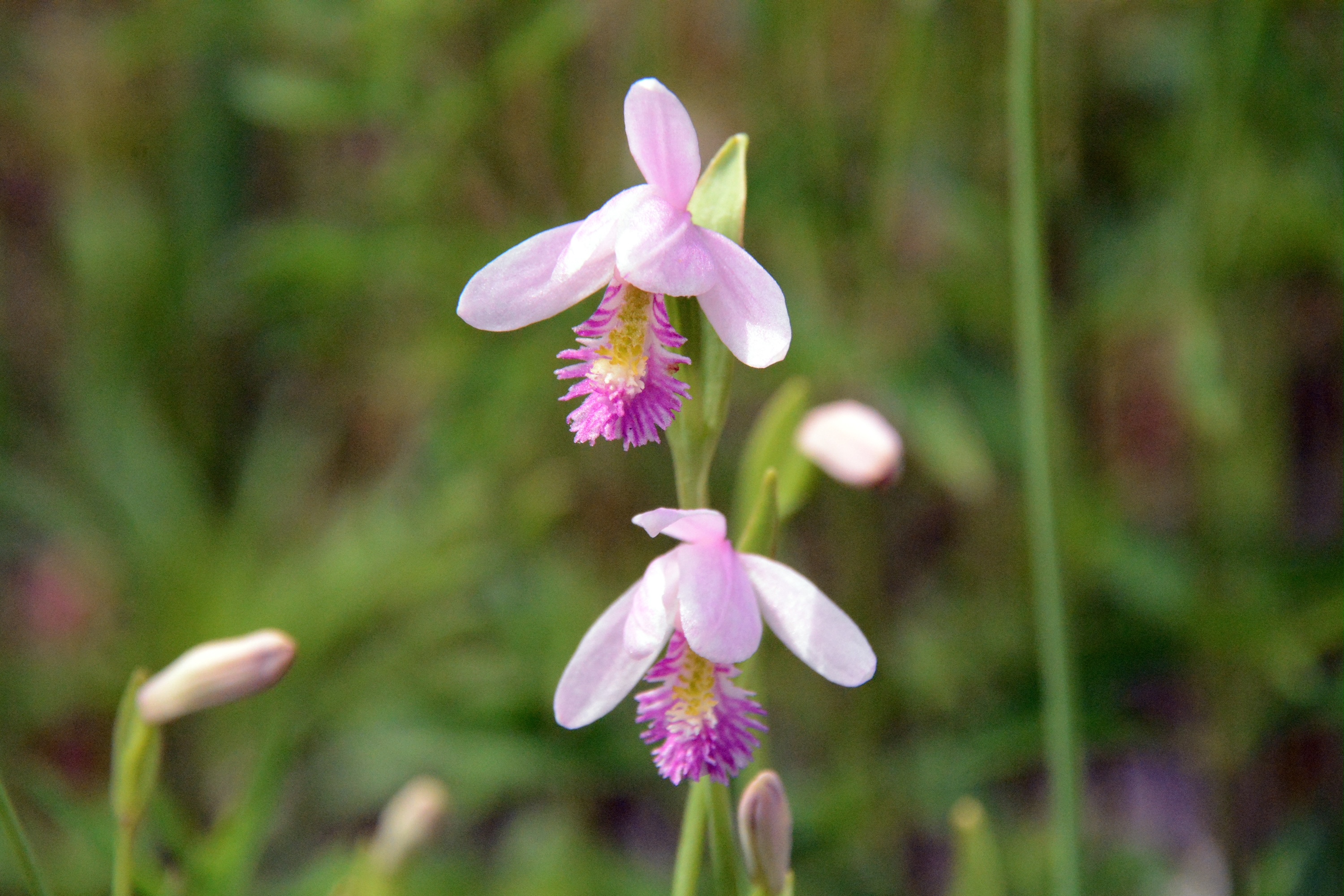
The Green Swamp Preserve is home to at least 16 species of native orchids, including the rose pogonia (Pogonia ophioglossoides). Photo by Tom Earnhardt
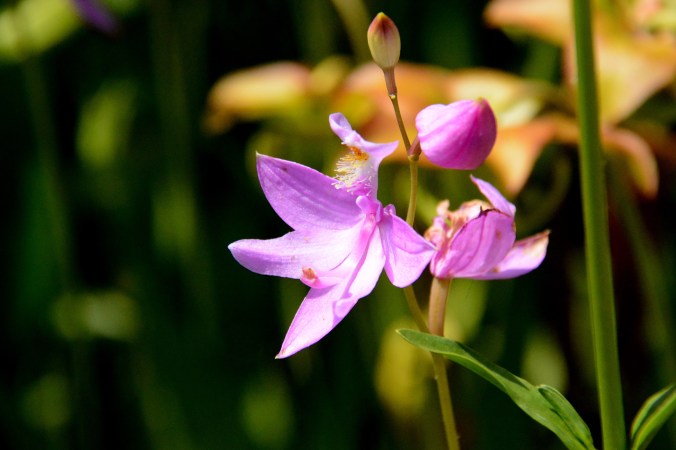
The grass pink orchid (Calopogon tuberous) is another of the native orchids found in the Green Swamp Preserve. Photo by Tom Earnhardt
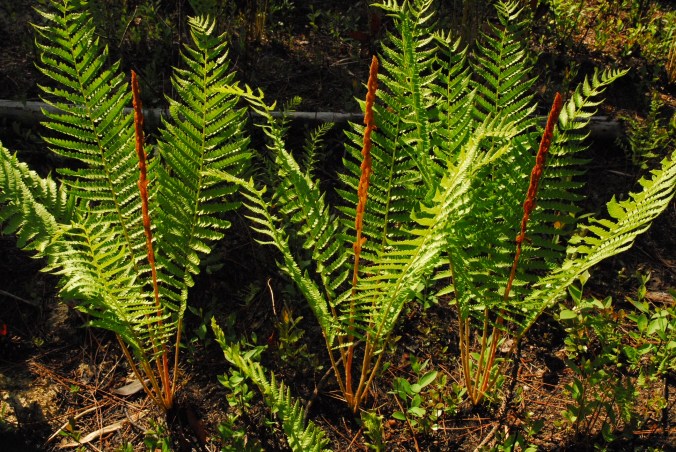
Cinnamon ferns in springtime, the Green Swamp Preserve. Photo by Tom Earnhardt
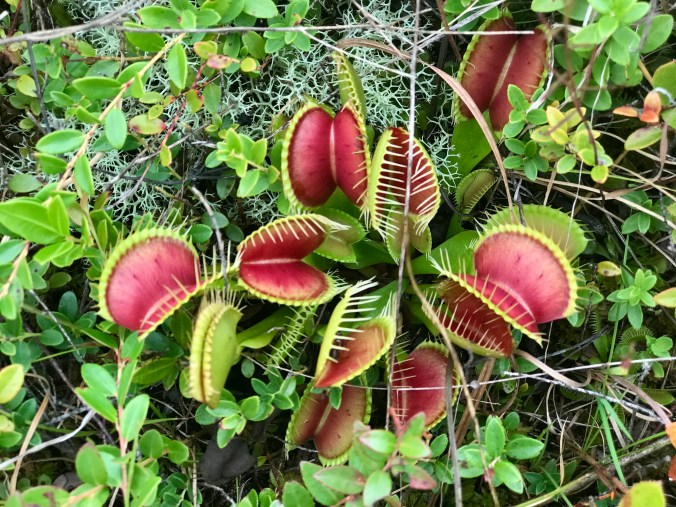
The only native habitat of the Venus flytrap is the bogs, pine savannas, and similar wetlands within approximately 90 miles of Wilmington, N.C., including the Green Swamp Preserve. “There’s no better place to observer Venus flytraps (Dionaea muscipula), especially when they begin to turn red, or even a deep crimson, in August and September,” Tom told me.
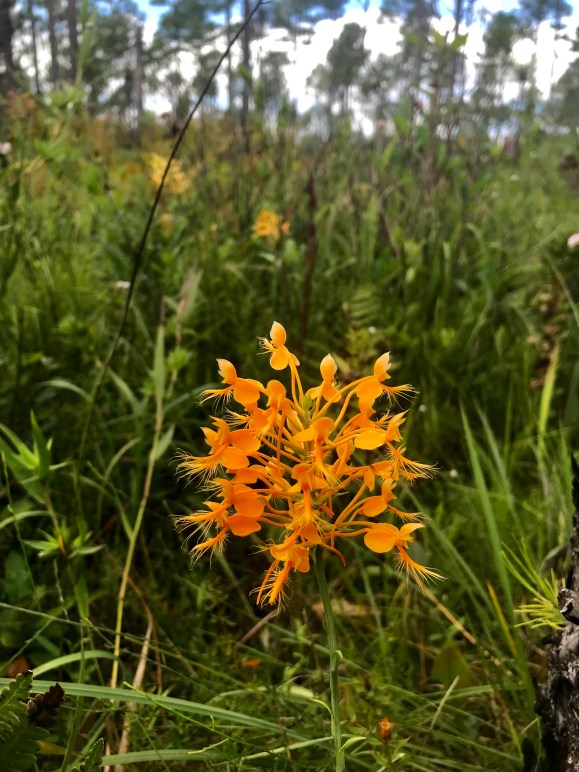
Tom told me that the yellow fringed orchid (Platanthera ciliaris) is one of his favorite North Carolina wildflowers. It blossoms in the Green Swamp from late July into early September. Photo by Tom Earnhardt

This is blazing star, one of several species of Liatris found in the Green Swamp starting in August. Photo by Tom Earnhardt
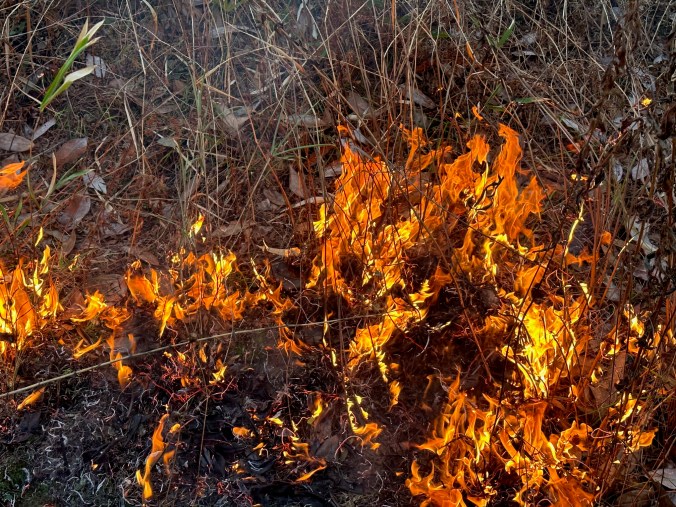
Tom always emphasizes that periodic fires are an essential part of the Green Swamp’s ecology. Among much else, they provide the open ground necessary for longleaf pines to germinate and grow. For more on the role of fire in the Green Swamp Preserve, see the Nature Conservancy’s Controlled Burning Brochure.
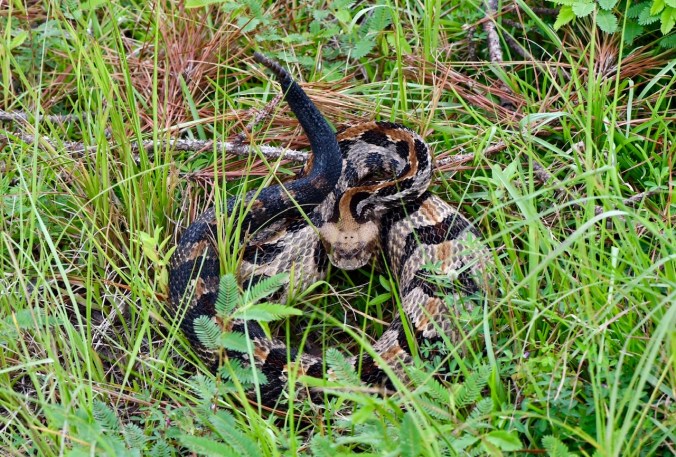
Timber rattlesnakes (Crotalus horridus) are not common in the Green Swamp Preserve, but Tom has seen a couple of them on rambles through its pine savannas. He said hello to this one in September 2020. Timber rattlers and other reptiles play a critical role in longleaf pine ecosystems. Photo by Tom Earnhardt
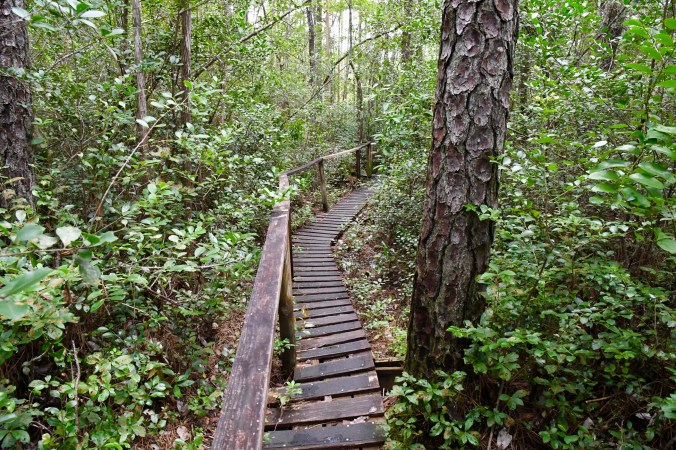
The Nature Conservancy has provided a mile-and-a-half-long trail to give visitors a chance to see the Green Swamp Preserve for themselves. You can learn more about visiting the Preserve here. Photo by Tom Earnhardt
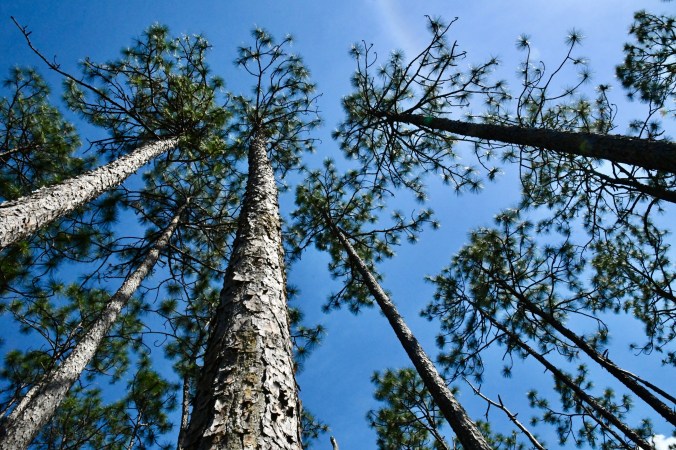
Looking up into the longleaf pines at the Green Swamp Preserve. Longleaf pine forest once stretched across a vast swath of the American South. Photo by Tom Earnhardt
Lucky for us, we can find all 14 seasons of Tom’s award-winning show Exploring North Carolina at WUNC-TV’s website here. And to learn how you can support the Green Swamp Preserve and other critical land conservation efforts in our part of the world, be sure to check out the website for the Nature Conservancy’s North Carolina chapter here.
 David Cecelski
Thanks for the post. I remember visiting the early plot of land the Nature Conservancy purchased there in the late 70s on a Sierra Club outing. I was either a student at UNCW or had just graduated.
https://fromarockyhillside.com
LikeLiked by 1 person
Stephen, why don’t we take a hike out there sometime?
Sent from my iPhone
<
div dir=”ltr”>
<
blockquote type=”cite”>
LikeLike
BEAUTIFUL. THANK YOU.
LikeLike
David, thank you and thanks to Tom for the grand photos. I wonder how many endemic orchids still grow there or nearby.
Thank you also for the post about Piney Grove, the Evans family and other preservationists there. I found it so moving and energizing, but, oh, that Hole.
LikeLike
A very good read David. I have always enjoyed walking through the pocosin and the long leaf pine savanna’s searching for Venus fly traps and other carnivorous plants only to observe their unique reactions to flys and other insects. They are fascinating to watch. My occasional encounters of the Timber and Eastern Diamond back rattlesnakes are always a treat. Never do I harm, but only to happily observe their existence.
keep up the good work!
very enjoyable
LikeLike
Maybe it’s growing up in Havelock, Terry! Must be in our blood! So many people don’t seem to like pocosins and swamplands, but I’m with you– really special places! Nice to hear from you as always!
LikeLike