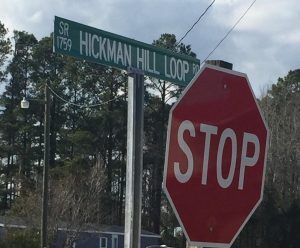
Only a few years out of slavery, an African American couple named David and Sarah Hickman purchased the land that came to be Hickman Hill. Located in the eastern part of Craven County, 130 miles east of Raleigh, the community is home to their descendants to this day. Photo courtesy, Latonya Jones
I recently visited with Latonya Jones in Hickman Hill, a lovely and historic old African American community not far from where I grew up in the eastern part of Craven County.
Hickman Hill occupies a low rise a few miles west of Havelock, just off Highway 70 East and a stone’s throw from the pine savannas and pocosin swamps of the Croatan National Forest.
Latonya’s family has lived in Hickman Hill since just after the Civil War and the end of slavery.
According to her research, her great-great-great grandfather, a formerly enslaved man named David Hickman, first purchased the land that became Hickman Hill in 1873.
David Hickman and his wife Sarah‘s children and their descendants have held onto the land at Hickman Hill ever since.
Latonya is a remarkable woman. A busy mother of three, she works full time at a Havelock public school, leads the youth group at Green Chapel Missionary Baptist Church, and still makes time to be the keeper of Hickman Hill’s history, which is how I came to know her.
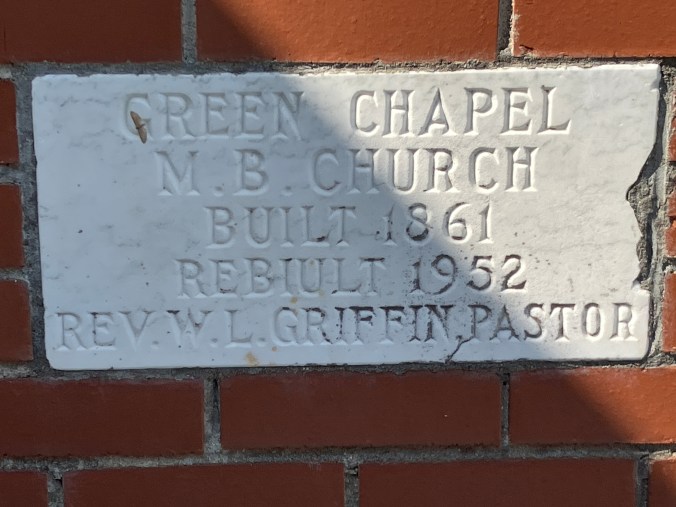
The cornerstone at Green Chapel Missionary Baptist Church in Hickman Hill. First established around the time of the American Civil War, Green Chapel is one of the oldest African American churches on that part of the North Carolina coast. Photo by David Cecelski
-2-
Some people just seem to be caretakers of the past, keepers of memories, holders of the old people’s stories.
I could tell from the start that Latonya was one of those people.
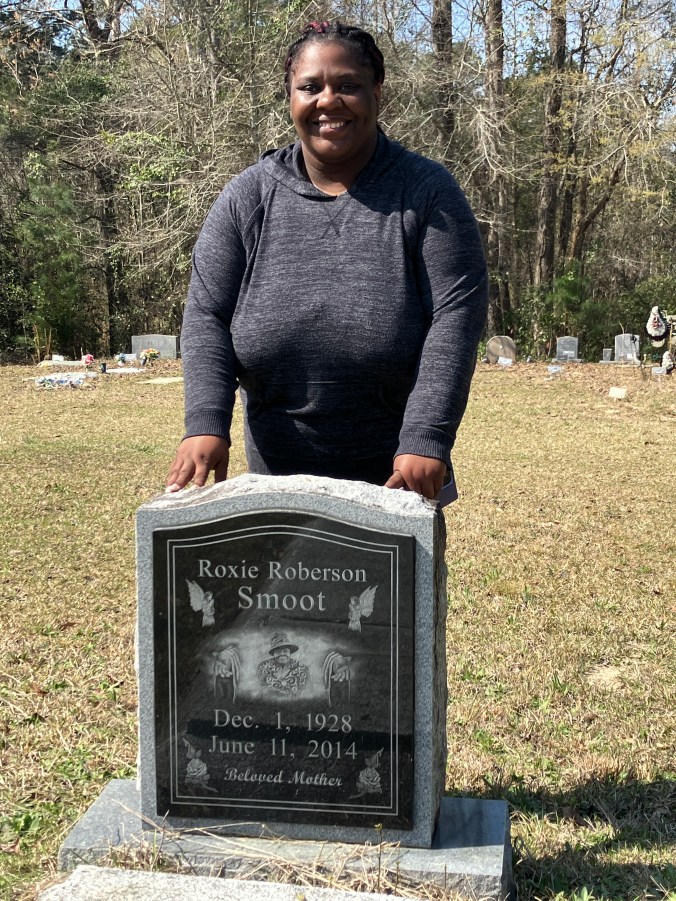
Local historian Latonya Jones standing by the burial place of her beloved grandmother, Roxie Roberson Smoot, in Hickman Hill, just west of Havelock, N.C. Photo by David Cecelski
A few weeks before my visit to Hickman Hill, Latonya had emailed me with a historical question or two about one of the community’s native sons, the Rev. Willie Gray Hickman
The Rev. “Willie” Hickman was one of the unsung heroes of America’s civil rights movement.
Born in Hickman Hill in 1919, he was an influential A.M.E Zion minister, a community activist, and a pioneering civil rights leader in Craven County from the 1940s until his death in 1997.
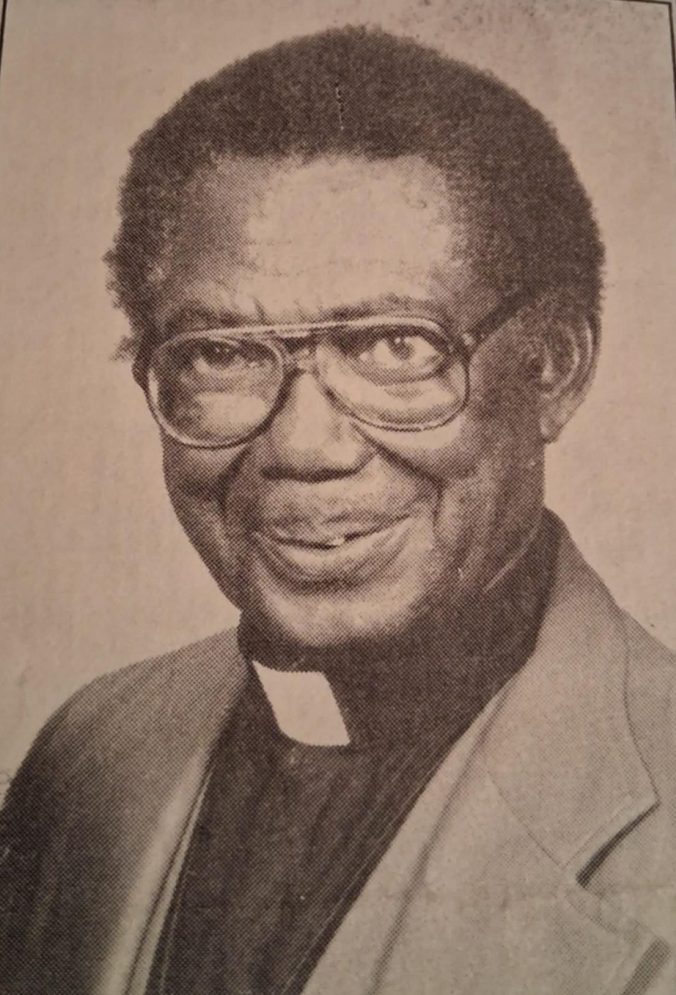
The Rev. William Gray Hickman (1919-1997). A native of Hickman Hill, he was an AME Zion minister, community activist, and civil rights leader. Photo courtesy, Latonya Jones
By the time he was 22 years old, the Rev. Hickman was the president of the Craven County branch of the NAACP. (I learned that fact from Latonya.)
He later worked closely with the Rev. Martin Luther King, Jr., and was a driving force in the civil rights movement throughout Craven County.
By 1960, only a few weeks after the Greensboro sit-ins, the Rev. Hickman was leading sit-ins to end the exclusion of blacks from New Bern’s soda fountains, restaurants and department stores.
Throughout the 1960s and ‘70s, he led civil rights protests, voter registration drives, and other community organizing campaigns to gain racial justice and equal rights in Craven County.
Wherever a child was mistreated, a family threatened, or a right to vote denied—the Rev. Hickman seemed to be there.
From everything I have ever heard about him, and from everything Latonya taught me about him, the Rev. Hickman was one of those rare people who was always ready to stand with and fight for those the Rev. Jesse Jackson called the “damned, despised and dejected” of the earth.
-3-
When Latonya reached out to me, she was preparing a presentation on the Rev. Hickman for a Black History Month event at Green Chapel.
She had read an article that I wrote a few years ago on the pathbreaking campaign to end racial segregation in Havelock’s public schools. That article was titled “In the Small Town Where I Grew Up.”
In that article, I discussed Rev. Hickman’s leadership in making Havelock the first town in the state of North Carolina to have a significant number of black and white children going to school together.
(From 1959 to 1961, my little hometown had more black and white children attending its public schools together than all the other public schools in North Carolina combined.)
When she contacted me, Latonya was hoping that I might know more about the Rev. Hickman than I had put in that article.
Unfortunately, that was not the case. Over the years, I had heard many secondhand stories about the Rev. Hickman, but I did not know even the barebones of his life.
From our first telephone call, I could tell that Latonya knew far more about the Rev. Hickman than I did.
She had gathered stories about him from Hickman Hill’s elders. She had combed through old newspapers and searched local libraries for records related to the Rev. Hickman.
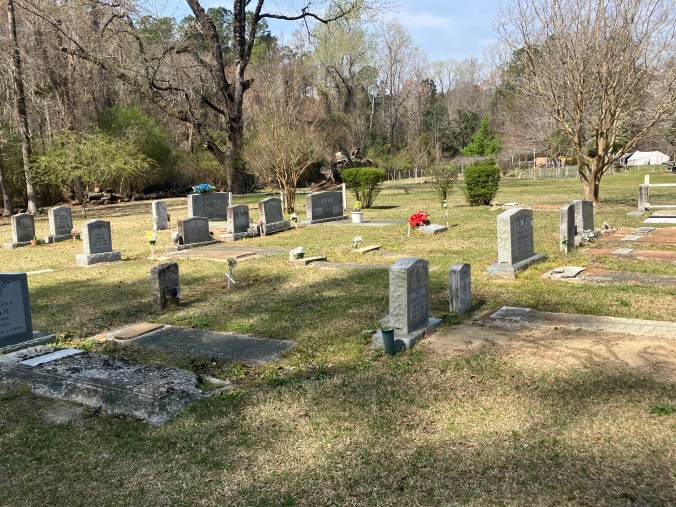
This is one of the Hickman Hill cemeteries that Latonya and I visited. Photo by David Cecelski
She had also found a pair of oral histories with the Rev. Hickman that were done just a few years before his death in 1997.
Latonya found one of those interviews in the “Behind the Veil” oral history collection at Duke University’s Special Collections Library. She located the other at the New Bern-Craven County Public Library.
Another special find was a much older interview with Rev. Hickman’s great uncle, Needham Hickman.
Latonya told me that Needham Hickman was one of David Hickman’s sons and was one of the original settlers of Hickman Hill.
That interview was especially important to Latonya because it was done as part of the Federal Writers’ Project in 1938 and Needham Hickman’s family stories reached back before the Civil War.
-5-
I wish that I could have been there for Latonya’s presentation at Green Chapel. She sent me her PowerPoint presentation so I know that it was really well done and really special.
I learned a great deal from the presentation, and I found her portrait of Rev. Hickman’s life to be both educational and inspiring. It felt good to see that the Rev. Hickman was not forgotten, and that a man who stood up for justice and equality was remembered in such a fitting fashion.
I cannot imagine a better time in America’s history for us to be reminded of the Rev. Hickman and all those who risked so much and fought so hard for equality, voting rights, and justice.
-6-
When I stopped in Hickman Hill, I really just wanted to meet Latonya face to face for the first time and tell her thank you again for sharing so much historical information about Rev. Hickman with me.
However, after we talked a while, Latonya very graciously offered to give me a historical tour of Hickman Hill.
To my great pleasure, she showed me all around the community. We visited Green Chapel. I had the pleasure of meeting her aunt. And we took long walks through two of the community’s cemeteries.
As we walked among the graves, Latonya told me stories about the people who were buried there.
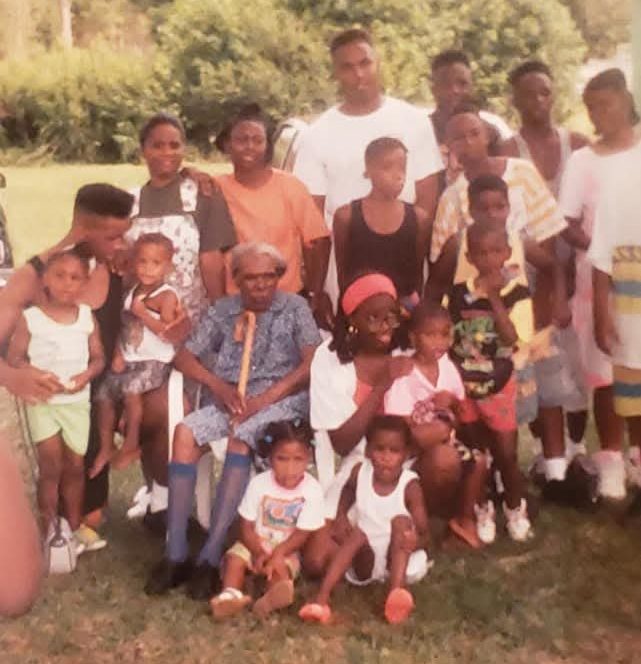
Latonya Jones’ great-great-grandmother Emma Hickman Roberson with some of the younger members of her family at a family gathering some years ago. Photo courtesy, Latonya Jones
On the far side of the marshy creek that divides Hickman Hill into two neighborhoods, we also visited the grave of the Rev. Hickman.
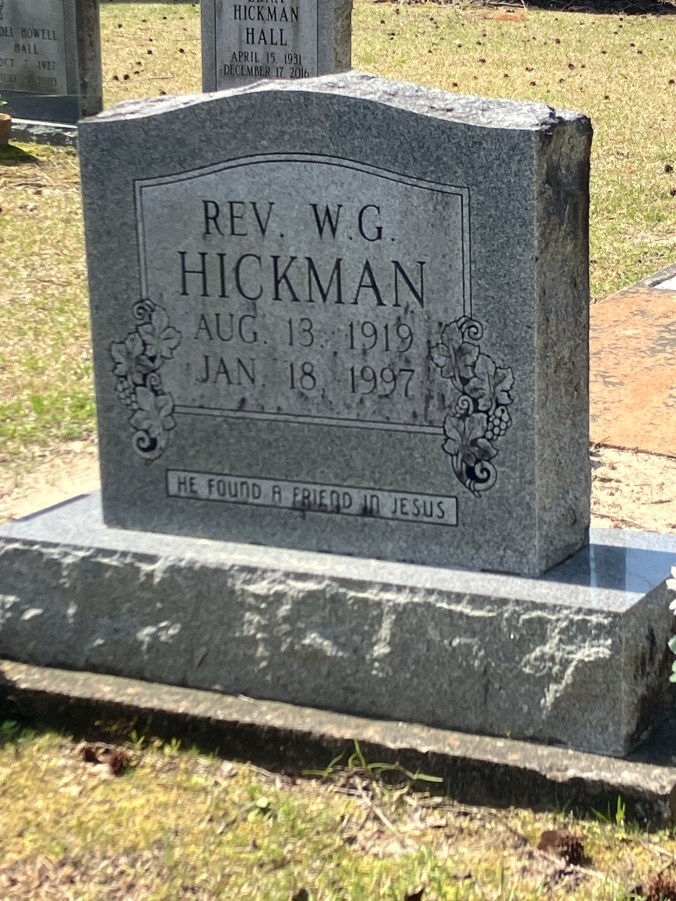
The gravestone for the Rev. William Gray “Willie” Hickman 1919-1997. Photo by David Cecelski
Nearby I found the grave of one of my classmates in junior-high, Memphis Hickman.
Memphis was one of the smallest kids in our class, but I will never forget his irrepressible, jaunty swagger and the joy that he brought to life.
At another cemetery in Hickman Hill, we visited the marker for Latonya’s beloved grandmother, Roxie Roberson Smoot.
She had only died in 2014, and Latonya remembered her with great affection.
Latonya told me that her grandmother had begun working full-time at the Cherry Point Marine Corps Air Station (MCAS) when she was only 16 years old.
She retired from the Naval Aviation Depot (NADEP) at Cherry Point after 47 years as an aircraft painter.
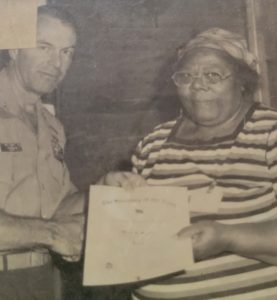
Latonya’s grandmother, Roxie Roberson Smoot, receiving a commendation in recognition of 45 years of service at the Naval Aviation Depot at the Cherry Point Marine Corps Air Station. Photo courtesy, Latonya Jones
In addition, Latonya’s grandmother Roxie had nine children of her own. She was the second born of nine children. She helped financially support her mother and her siblings.
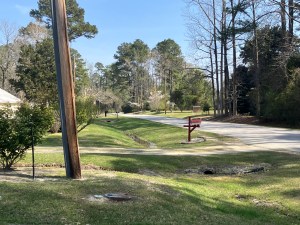
A quiet street scene in Hickman Hill. Photo by David Cecelski
Her grandmother went to work at Cherry Point at the beginning of World War II, when the base was just being built and a call had gone out for local women to leave their work in the fields and take military jobs.
Because of the wartime labor shortage, Cherry Point welcomed thousands of women workers, white and black, all of whom were desperately needed with the men off at war.
Many of the women were needed for jobs that they would never have been permitted to do before the war because of their gender or because of their race or both.
Roxie Roberson Smoot was one of the pioneers at Cherry Point.
Seeing her grandmother through Latonya’s eyes, I came appreciate the courage it had taken for a 16-year-old girl to go from Hickman Hill to Cherry Point back in that time and place.
That was just one of many things that I learned from Latonya in Hickman Hill.
It was a joy to get to spend a morning with Latonya, and I am very grateful to her for sharing so much of Hickman Hill’s history with me.
I will never drive down Highway 70 again without thinking of all she taught me about Hickman Hill and its history– and I am very excited to see what she discovers next.

 David Cecelski
What a pleasure to read this heartwarming story as an antidote to the surfeit of bad news surrounding us these days. Thank you.
LikeLike