It was the third Friday of Lent. I was driving through a rural part of Eastern North Carolina, coming back from somewhere, a lecture probably or something like that, and I was tired.
The trip had been long. I had already driven for hours, it was cold and drizzly and the roads were wet. But mostly I was feeling weary of spirit. All the bad news.
The wars, the unbridled greed and all the rest. On my car radio, I had heard the president’s latest speech against immigrants and refugees. Calling them criminals, vermin, poison, and the unwashed.
In a small town near where I grew up, I stopped and took a long walk to stretch my legs and clear my head. I walked first around the town square, then set off into one of the old neighborhoods.
After a few blocks, I came upon a little church where a small crowd of people were going in the front door.
I had arrived at the one of the church’s celebrations of the Stations of the Cross, which I learned later it held every Friday during Lent.
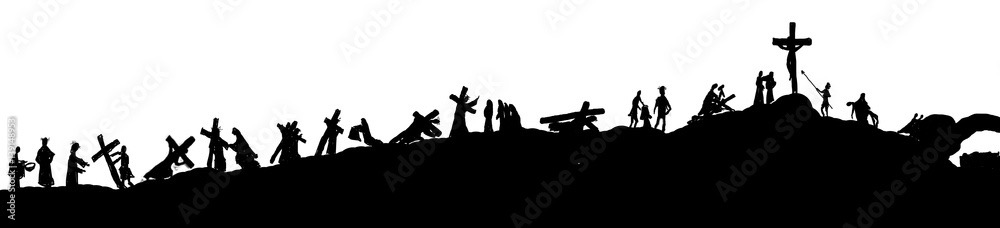
The Stations of the Cross is a prayer service that recounts the path of Jesus to the cross and his tomb. I have always found it one of the most moving and meaningful parts of Lent.
Thinking about how weary I was, perhaps when I should have been thinking about when I needed to be home, I entered the sanctuary.
I found a seat in a back pew. People were still trickling in. Most looked like the people around whom I grew up, families that had lived in the little town all their lives, or at least for many years.
Others I assumed were immigrants, new to this country. I heard a mother and father and three little children whispering in Spanish, and my neighbor in the pew turned out to be a public-school teacher from the Philippines.
I did not recognize any of them. They were all strangers to me.
I
The service began. At the altar, a woman, there by herself, read: Station One: Jesus is Condemned to Death.
The Bible reading for the First Station was Mark 15:15: Pilate hands Jesus over to be crucified.
A brief reflection followed: Many immigrants experience unjust judgments and condemning looks from people who do not know their story. Jesus understands this pain and accompanies those judged for seeking a dignified life.
Then there was a prayer: Lord Jesus, accompany those who are judged without being heard and grant them the peace of knowing they are loved by you.
—
I am always astonished at the unexpected ways that hope is renewed within us. I was glad that I had come in the door.
One of the joys of being an historian of a place—not of a time or a subject, but a place and its people—is that I travel through the place I write about often.
I get to see things. I get to talk to people. I sometimes get to experience things that I might not otherwise know or understand.
II
The reading of the Second Station began: Jesus carries the cross.
The Bible reading was from John 19:17: Jesus carries his own cross.
Again, a brief reflection followed: Those who migrate carry real crosses: fear, nostalgia, separation, uncertainty. Jesus takes up our cross to show us that we are not alone.
And then the prayer: Jesus, strengthen those who carry the cross of uprooting. Walk with them.
—
After the reading of each Station, two children, holding a cross between them, moved through the church, from one tapestry showing the scene described by the reader to the next.
III
Then came the Third Station: Jesus falls for the first time.
The Bible reading was from Isaiah 4-7: He has borne our griefs and carried our sorrows.
The reflection: Exhaustion and rejection cause many to fall. Jesus, who also fell, reminds us that our dignity remains intact.
And the prayer: Jesus, lift up those who stumble on the path of migration. Give us hope.
—
At every Station of the Cross, I was realizing, we would be reflecting on the crucifixion of Christ and what it means for those who are strangers here and for those who greet them.
IV
The Fourth Station was next: Jesus meets his mother.
The Bible reading was from Luke 2:35: A sword will pierce Mary’s soul.
The reflection made my heart ache: Immigrants dream of an embrace left behind. Jesus and Mary reveal that love, even at a distance, sustains and accompanies.
And the prayer: Jesus, console those who are far from their families. Be their embrace.
V-VII
By the time I gathered my thoughts again, the reader had moved onto the Seventh Station: Jesus falls for the second time.
The Bible reading was from Psalms 38: 6-7: I am bowed down and brought low.
The reflection: Sometimes a repeated fall hurts more: failed paperwork, closed doors, lost opportunities. Jesus teaches us to persevere.
Again, the prayer: Lord, encourage those who feel that life keeps repeating the same trials. Sustain their faith.
VIII
The Eighth Station was no less moving: Jesus consoles the women.
The Bible reading was from Luke 23: 27-31: Daughters of Jerusalem, do not weep for me.
The reflection was simple, but also not: Even wounded, Jesus looks upon others’ pain. May our communities learn to listen without judging.
And the prayer: Jesus, make our communities places of true compassion.
IX
Then came the almost unbearable Ninth Station: Jesus falls for the third time.
The Bible reading was from Psalm 37: 23-24: Though he falls, he shall not be cast head long.
The church’s reader followed with the reflection: Some immigrants feel that they cannot go on. Jesus falls to the lowest point to assure us that he is there as well.
And the prayer was for all of us: Lord, sustain those exhausted by fear and loneliness. Do not let them lose faith.
X
We were coming to the end. Or I guess some would say the beginning– the Tenth Station: Jesus is stripped of his garments.
The Bible reading was from John 19:23-24: They divided his garments and cast lots.
The reflection: Immigrants are often stripped of their language, stability, identity. Jesus reminds us that dignity cannot be taken away.
The prayer: Jesus, restore dignity and strength to those who have lost everything along the way.
XI
Then there was the Eleventh Station: Jesus is crucified.
The Bible reading was from Luke 23:33: They crucified him there.
The church’s reader gave the reflection: Some feel that life has “nailed” them into suffering without escape. Jesus enters that pain to fill it with meaning.
Then the prayer: Lord, enter the suffering of those who feel they can no longer continue and pour out Your mercy.
XII
And then the Twelfth Station: Jesus dies on the cross.
At that moment, all in the church knelt. The Bible reading was from Luke 23: 44-46: Father, into your hands, I commend my spirit.
Then came the reflection: Along many migration paths there are deep losses and griefs. Jesus died to transform all human suffering from within.
Again, the prayer: Jesus, receive the losses of those who migrate and transform their suffering into seeds of new life.
XIII
The Thirteenth Station followed: Jesus is taken down from the cross.
The Bible reading was from Mark 15: 42-46: Joseph of Arimathea takes Jesus’ body down.
The reflection again followed: Mary receives the wounded body of her son. We too are called to welcome and care for the wounded bodies and souls of the world.
And the prayer: Lord, bless those who accompany the most vulnerable with tenderness and faith.
XIV
Lastly, there was the Fourteenth Station: Jesus is laid in the tomb.
The Bible reading was from John 19: 38-42: They laid Jesus in the tomb.
The church’s reader gave the last reflection: The silence of the tomb reflects the long silences and waiting endured by immigrants. God acts even when we do not see Him.
And the last prayer before we left the church: Jesus, teach us to wait with you. May every immigrant find a dawn of hope in their night.
—
As I left the church that day, I thought about all the bad things I had heard about immigrants from our nation’s leaders in Washington, DC while I was driving home earlier that day.
And I thought about this little church in a quiet little town, and the tenderness and compassion I had heard there for immigrants and all those who are uprooted and seeking a home.
I thought about all the other Stations of the Cross that would be happening this Lent, and all the other people who go to them, those who are new here and those like me that hardly know anywhere else.
My heart filled with hope. I let myself believe in the goodness of this place I come from.
As I walked back to my car, I felt as if I was holding the voices in Washington, DC in one hand, the prayers from the Stations of the Cross at this little small-town church in the other.
I opened the one hand and let the voices from Washington DC vanish in the wind.
Happy Easter.
 David Cecelski
Beautiful essay, thank you for sharing. Patti phelps
LikeLike
Thank you.
The Reverend Dr. Anna Pinckney Straight
Pastor, First Presbyterian Church
New Bern, North Carolina
anna@firstpresnb.org
252.637.3270 (office) ~ 919.265.7614 (cell)
Please know:
I will never email or text asking for money or gift cards
and I will always, always, always
want you to contact me or the church office
to verify any requests.
LikeLike
David, Thank you for this powerful message. Love, C. Catherine W. Bishir cate902@yahoo.comCary NC919-377-0020 h919-744-7746 c
LikeLike
Hi David, Thank you for this article on this Easter Holiday. I too have been feeling hopeless with what’s happening in our country. I am opening my hand and blowing the worries to the wind in addition to sending up a prayer for all of us. Respectfully,Darlene Badger If you fail to plan, then you plan to fail.
LikeLike