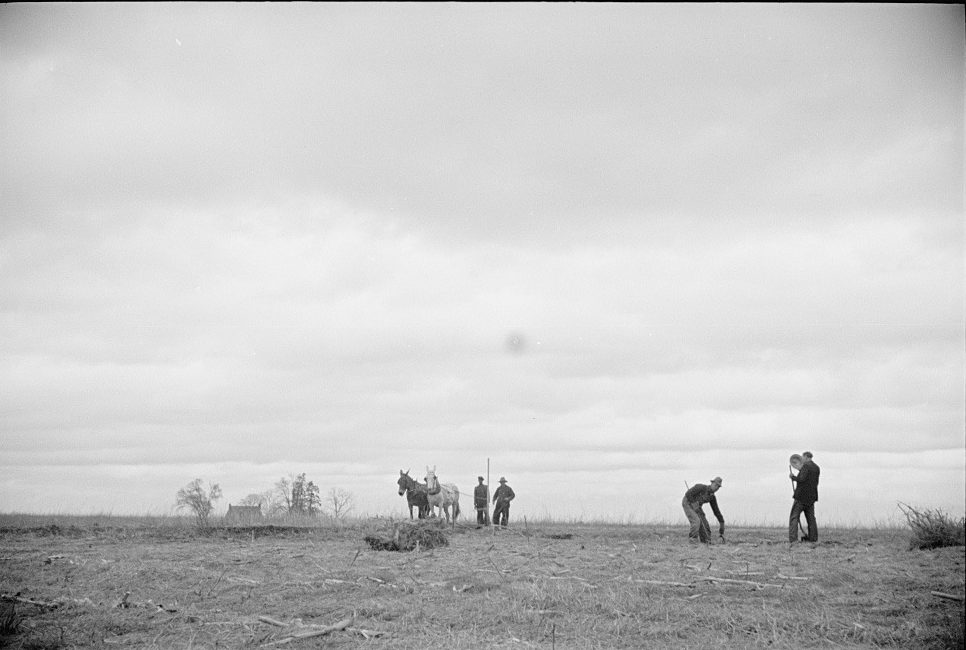
This untitled photograph of a farming scene in North Carolina was taken by Farm Security Administration photographer Carl Mydans in March 1936. Courtesy, Library of Congress.
It feels strange to look back into the past and feel heartbreak for people’s suffering, and all they did without, when they are long gone and there is nothing left to be done about their want or need.
But I cannot always help myself, and that is how I felt when I read these words that were written by a tenant farmer– initials “S. B.”– in Martin County, North Carolina, in 1887.
“We can’t send our children to school for the reason that, advantage being taken of us, we have nothing with which to clothe our children.”
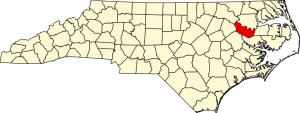
Martin County, North Carolina. The county seat is Williamston. All maps in this article are courtesy of the Wikipedia entries for the individual counties.
I am not sure why those words hit me so hard. From my historical work, I knew those were hard times.
In those decades after the Civil War, tenant farmers and other landless farm workers made up a majority of the population in large swaths of Eastern North Carolina, and I already knew they did without.
I knew that hunger haunted many of them. I knew that they often could not afford doctor visits or medicine. I knew that they frequently could not keep the cold and rain out of their homes.
I knew all that. Yet I still found something about “S. B.’s” words, and the frank admission that he– or she– could not send their children to school because they could only dress them in rags, heartbreaking.
That was even more true because, in the historical document where I found “S. B.’s” quote, I also read the testimony of a multitude of other tenant farmers and farmworkers who said the same thing.
Times were so hard, they repeatedly said, that they could not even clothe their children.
“Views of Tenants and Farm Laborers”
I found the quote from “S. B.” in what seems like an unlikely place, but one that turned out to be surprisingly informative– the first annual report of North Carolina’s Bureau of Labor Statistics.
Established in 1887, the Bureau of Labor Statistics was the forerunner to what is now the North Carolina Department of Labor.
According to contemporary accounts, the Bureau was created in response to pressure from the Knights of Labor and the Farmers Alliance, two labor movements that had arisen out of the mass exploitation of farmers and factory workers across much of the United States.
The idea for the Bureau of Labor Statistics, as it was described at the time, was to provide a voice for working people within state government.
Overall, that did not happen. Instead, the governor at the time, a banker and attorney named Alfred M. Scales, made sure that the Bureau almost exclusively served business interests.
Reflecting its business orientation, the Bureau’s first annual report was a sprawling, compendium of labor data and aggregated survey results that in most cases could not have been duller or more dreary.
But there was the one section that I found very different. Beginning on page 124, the Annual Report has a chapter called “Views of Tenants and Farm Laborers: Extracts from Letters to the Bureau on Various Subjects from Tenants and Farm Laborers in the Different Counties of the State.”
That is where I found the quote from “S. B.,” the tenant farmer in Martin County.
The full quote reads:
“Tenants and farm laborers have a very bad chance. Wages are very low and are paid in trade at high prices. We can’t trade where we choose. We can’t send our children to school for the reason that, advantage being taken of us, we have nothing with which to clothe our children.”
Unlike the rest of the Annual Report, that chapter includes no statistics, analysis, or interpretation. It is simply a collage of brief quotes taken from letters that tenant farmers and farmworkers had written to the Bureau.
The most striking thing about the letters to me was how often the tenant farmers and farm laborers mentioned their inability to clothe their children well enough to go out in public at all.
“It Will Swallow Us Body and Soul”
Here is a sample of those quotes:
In Bladen County, in the swampy low country west of Wilmington, an individual with the initials “A. P.” wrote:
“A great many laborers in this section [have] gone to Georgia to work in turpentine fields. This part of the state is in a bad condition now and wages are low. The poor can’t clothe their children for school, so that not over half attend.”
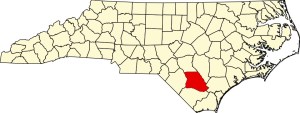
Bladen County, North Carolina. The county seat is Elizabethtown.
In Columbus County, also in the state’s southeast corner, a farm worker listed only as “B. P.” stated:
“The children of tenants and farm laborers are not able to attend school or church for want of proper clothing. They are very poor and getting worse.”
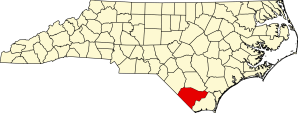
Columbus County, North Carolina. Whiteville is the county seat.
In Beaufort County, closer to where I grew up, a tenant farmer or farmworker with the initials “F. M. S.” declared:
“The poor cannot clothe their children decently enough for a school room because of the exorbitant rate of interest they are charged for [farm] supplies; they are obliged to pay whatever the merchants charge. This is a most pressing evil and should be stopped by law or it will soon swallow us body and soul.”
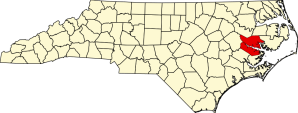
Beaufort County, North Carolina. Washington is the county seat.
In the heart of cotton plantation country, where thousands of black tenant farmers at that time were organizing chapters of the Knights of Labor, “A. Y. H.” in Nash County said much the same thing:
“Tenants and farm laborers cannot send their children to school for want of proper clothing.”
More than 200 miles to the west, in the foothills of the Appalachian mountains, “L. H.” in Ashe County made the same point.
“The poor cannot send [children to school] in winter for want of proper clothing.”
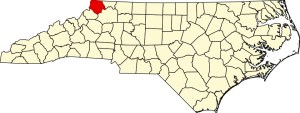
Ashe County, North Carolina. The county seat is Jefferson.
In Durham County, in the state’s piedmont, another tenant farmer or farm laborer, initials “F. W. R.,” reported:
“. . . the schools are now usually taught in winter when the child of the poor man is poorly clad and hence unable to attend; in summer they must work, and so they do not attend school.”
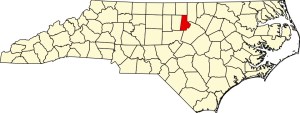
Durham County, North Carolina. The county seat is Durham.
In yet another letter, in a more western part of the state’s piedmont, “S. A. H.” in Forsyth County wrote:
“Many whites do not send their children to school for want of proper clothes.”
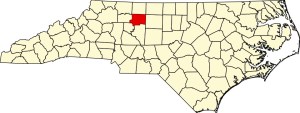
Forsyth County, North Carolina. Winston-Salem is the county seat.
Here are some of the other, similar quotes that I found in the report:
From “T. H. W.” in Lincoln County:
“Tenants are somewhat oppressed in some parts of our county . . . . They cannot clothe their children properly to go to school in the open log cabins where the schools are taught.”
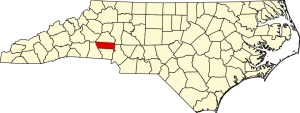
Lincoln County, North Carolina. The county seat is Lincolnton.
From “I. S.” in Mitchell County, on the far side of the Blue Ridge Mountains:
“Want of schools, low wages and short crops have run the farm laborers down to a low condition; they can’t attend school if they had them or church for want of proper clothing.”
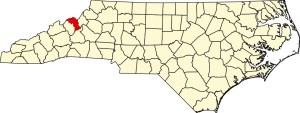
Mitchell County, North Carolina. The county seat is Bakersville.
From “T. J. C.” in Montgomery County:
“Farm tenants do not attend school or church as they should for want of proper clothing.”
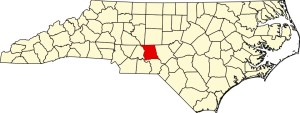
Montgomery County, North Carolina. The county seat is Troy.
And this from a tenant farmer or farmworker whose initials were “B. J. R.,” also in Montgomery County:
“The hired hand and the tenant has a hard time; between high rent, low wages, short time of regular work and time prices, the landlord gets all and they have nothing to buy clothing for schools or churches.”
I should note that all of these letters were very likely written by white tenant farmers and farm laborers.
To be blunt, Gov. Scales was not someone tolerant of having the voices of the state’s black or Indian citizens heard in a state government publication.
We might bear that in mind as we read these excerpts, knowing that, for many different reasons, working conditions for black tenant farmers and farm laborers would have been even worse.
“For Want of Proper Clothing”
While the sheer number of references to landless farm workers not being able to clothe their children astonished me, the Bureau’s report was not an isolated source of evidence.
I did not do anything close to an exhaustive search of the historical record, but after reading the Bureau’s report I did a quick survey of newspaper records and of my own published writings on the history of tenant farming and farm work in Eastern North Carolina.
In just a few minutes, I found a February 2, 1883 account from the Wilmington Messenger, in Wilmington, N.C., that refers to a Baptist group that provided clothes for those who could not come to church because of lack of clothing.
In a somewhat later edition of the Wilmington Messenger, dated February 2, 1895, I also found this passage:
“… there are many children who are absolutely deprived of the advantages of public schools for want of the proper clothing (especially shoes) to enable them to attend.”
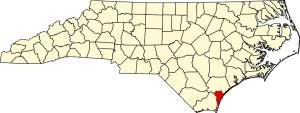
The Wilmington Messenger was published in Wilmington, the seat of New Hanover County, North Carolina.
Likewise, in the March 30, 1898 issue of the state’s largest Baptist journal, The Biblical Recorder, I found this observation:
“In the neighborhood of almost every Sunday school there are numbers of adults and children who cannot attend the church or school for want of proper clothing….”
Finally, in an essay that I wrote last year on Goldsboro barbecue legend Adam Scott, I found a quote from his grandfather that appeared in the New York Tribune near the end of 1879.
Adam Scott’s grandfather, C. A. Scott, was an African American farmer and political leader who was one of the leaders of the Exoduster movement in Wayne County in the late 1870s.
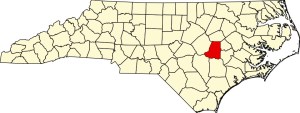
C. A. Scott was born into slavery in Johnston County, North Carolina, in or about 1838. He settled next door in Goldsboro, the seat of Wayne County (highlighted here) after the Civil War.
In 1879, a committee of African American leaders had chosen C. A. Scott to investigate the possibility of a mass migration of Wayne County’s black farmers to Indiana and Kansas.
After C. A. Scott returned from his research trip to the Midwest, a New York Tribune correspondent interviewed him about the Exoduster movement.
In that interview, the correspondent asked him why so many black tenant farming families were looking to get out of Eastern North Carolina.
As part of his reply, Scott explained that they were so deeply exploited that they could not clothe their families.
Or as he put it–
““Well, we have no chance in the world, and the colored people are getting desperate. We have been free 15 years. .., we have been cheated out of our wages; we don’t know how it is, but when the year is up we have nothing…. When we come into town, we have to hold our hands before us to hide our nakedness.”
When I was preparing that essay, I did not know quite what to make of C. A. Scott saying, “When we come into town, we have to hold our hands before us to hide our nakedness.”
After reading the 1887 report from the Bureau of Labor Statistics, I understood what he was saying all too well.
“It is Sapping the Life out of North Carolina”
The tenant farmers and farm workers who wrote to the Bureau of Labor Statistics were trapped in an agricultural economy dominated by the “crop-lien system” about which we all learned in school.
Under the workings of the crop-lien system, landless farmers had little choice but to work another man’s land “on shares” in order to provide for themselves and their families.
In order to “make a crop,” a tenant farmer was compelled to borrow from a local merchant to obtain seed, tools, fertilizer, and whatever groceries he and his family could not grow or make themselves.
The farmer paid the merchant back after the harvest at an exorbitantly high interest rate, and he was obliged by contract to give a large portion of his crop to the owner of the land.
If there was little or no profit, which was often the case, North Carolina law always favored the merchant and the landowner. They got their full shares first, even if that left the tenant farmer penniless and in debt.
To no small extent, it was a system of labor that mirrored the coercive, often savage force that had been present in slavery, but bankers, merchants, and landowners had adapted the system to “free labor” and to a brutal and exploitative brand of capitalism.
In the letters excerpted in the Bureau of Labor Statistic’s report, we can see the clarity with which tenant farmers and farm workers understood the root causes of their impoverishment.
Here is a sample of excerpts from the report’s letters in which tenant farmers and farm workers reflected on how things had become so bad.
In Beaufort County, a tenant farmer or farm laborer with the initials “A. R.” wrote:
“There is general depression and hard times and almost broken spirits among the tenant farmers. There are many things that contribute somewhat to this bad state of things but the one great cause is the outrageous percent charged for supplies bought on credit; it is sapping the life of North Carolina.”
In Harnett County, south of Raleigh, “J. E. D.” reported:
“Labor is down; so is the farmer. The merchant is the prosperous man now. Half of the farms are mortgaged to the commission merchants, who charge 50 percent above cash prices. Half of the farmers of this county are bound to merchants by the mortgage system.”
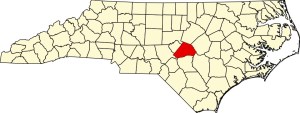
Harnett County, North Carolina. The county seat is Lillington.
In Hyde County, “G. H. W.” referred to a classic conflict: tenants and farm workers often yearned for their children to get at least some schooling, while landlords often required their children to work in the fields.
“The tenants and laborers are interested in education and are trying to send their children to school; the landlords are not caring much about it; they want work done and have no interest in anything further. They have not much use for preachers or teachers.”
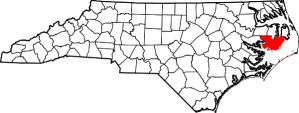
Hyde County, North Carolina. Swan Quarter is the county seat.
“Evidently There is Something Wrong.”
Reading the Bureau’s report, I could see the tenant farmers and farm workers dissecting the causes behind their troubles.
In Johnston County, east of Raleigh, for example, “W. G. L.” referred to the never-ending cycle of debt peonage in which many tenant farmers found themselves entrapped:
“Hard times is the cry. Tenants are far behind, caused by short crops for three years. If we could get cash for our work and produce and pay cash for what we buy we would be out of debt and doing well. As it is nearly everyone is in debt and getting worse every year.”
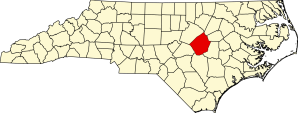
Johnston County, North Carolina. Smithfield is the county seat.
In Jones County, near the coast, a tenant farmer or farm worker with the initials “J. L. B.” wrote:
“In making advancements merchants take a mortgage on everything, the landlord for back indebtedness. Their general percent is about twenty, but taking it per annum from the time sales are made, it often amounts to over one hundred percent. . . . The landlord is a rapacious fellow, and has the tenant too much at his mercy. “
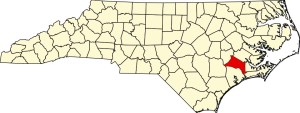
Jones County, North Carolina. The county seat is Trenton.
In that same part of the state’s coastal plain, in Onslow County, “A. A.” got down to the nitty gritty of the “chattel mortgage system.”
“One of the greatest curses to the tenant is the chattel mortgage system. . . . A mortgage is taken on everything a poor man has, whether he gives his assent or not. He signs, thinking all will be right, but when settling time comes, he finds his mistake. Big percent has eaten up crop, cattle and mule, and threatens his household …, and often menaces his liberty, because he has mortgaged property that cannot be found. He may say that he did not know such and such article was in the mortgage; it makes no difference.”
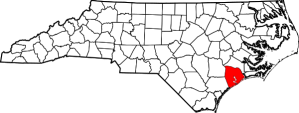
Onslow County, North Carolina. Jacksonville is the county seat.
The words of “J. H. R.,” in Sampson County, would resonate with many in America today.
“These are the hardest times ever seen here. The farmers have been speculated upon until they are pretty nearly gone up. Let something be done to protect the farmers and laborers from the ruinous prices charged them for guano and supplies.”
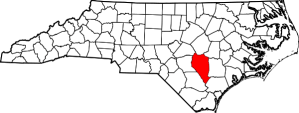
Sampson County, North Carolina. Clinton is the county seat.
In Surry County, northwest of Winston-Salem, a plainspoken tenant farmer with the initials “S. S.” wrote:
“We farmers work very hard, but get in no better condition. Evidently there is something wrong. The towns flourish, while in the country, where the producing element is, the people get worse off. We do not mind the work– were raised to it– but would like to get something for it.”
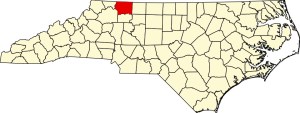
Surry County, North Carolina. The county seat is Dobson.
Lastly, in Wake County, where Raleigh is, a farmer with the initials “M. C. M.” told it like it was– and to a high degree, many would say, still is:
“Tenants grow financially worse every year; . . . many have become discouraged and gone to the towns, railroads, turpentine districts, etc. … The land is nearly all mortgaged to a few merchants and capitalists.”
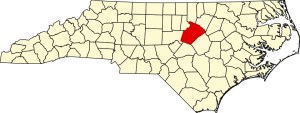
Wake County, North Carolina. The county seat is Raleigh.
In the months and years after 1887, such sentiments led to a new wave of Exodusters fleeing Eastern North Carolina.
It also led to the rise of the Knights of Labor and the Farmers Alliance, and eventually to the emergence of the Populist Party and the black/white political coalition that held sway in North Carolina from 1894 to 1898.
“The Girls Walking to Church”
A quarter century ago, I visited with a woman named Rene Whitney in a little settlement of farm workers called Delta City.
Delta City is in a very rural part of Beaufort County, North Carolina. Ms. Whitney was 85 years old at the time, and we had gotten together to talk about her life and the community’s history.
She was a deeply spiritual woman, full of joy and love though she had not had an easy life.
She had worked in the local fields since she was a child in the 1920s. The work had always been hard, the hours always long, the pay always low.
“I come through hard times and great tribulations,” she told me.
When she was a child, both her mother and father had grown ill and unable to work. Ms. Whitney was only 14 years old at that time, but she went into the fields and worked like a grown woman so that she could look after them and provide for her younger brothers and sisters as best she could.
They did without a lot of things. For Ms. Whitney, who was always happiest in church, doing without church was the one that was hardest to bear.
“After Mama and Daddy got sick, I had to stay home on Sundays,” she told me.
“I didn’t have a dress to wear to church. I couldn’t do nothing but stand there and look out the window at the girls walking to church. They had family to help them, you know, but I didn’t. Yes, it hurt. Hurt me to my heart.”
She had only a single dress at that time, stained and discolored and hardly more than a rag, she told me, and she wore it every day.
The more I thought about it, the more I realized that is why I felt so heartbroken when I first read these letters: they reminded me of that young girl standing by that window, watching the other girls go to church.
The memory made my heart go out to that child she was, and to all those children and their mothers and fathers back in 1887, but also to the children who are still with us who, because of want or fear, have no choice but to stand by windows and watch the world go by.


David I always love to read your Books and Essays. Love history and you do so well at bringing out the personal side of the people of that time. Thank You. I look forward to reading more of them.
Ginger Motes
LikeLike
Thanks so much Ginger– that means the world to me. Your momma was the same way: always believing in me and lifting me up!
LikeLike
If you ever think of a paddling trip that goes somewhere with a little-known history (maybe something I might want to write about!), be sure to let me know! It would be a lot of fun.
LikeLike
David, you wrote “(I) found something about ‘S. B.’s’ words, and the frank admission that he–or she–could not send their children to school because they could only dress them in rags, heartbreaking.”
The first thought I had when reading that and the many similar accounts that followed: Wow, look how far we’ve come. But that was a fleeting thought (understatement) quickly supplanted by another: Wow, look how far we’ve fallen.
Then when I got to the tenant farmer section of the essay I read this: “The tenants and laborers are interested in education and are trying to send their children to school; the landlords are not caring much about it; they want work done and have no interest in anything further. They have not much use for preachers or teachers.” At that point a sobering realization set in: Wow, nothing has really changed at all.
LikeLike
Ouch (the realization you are right). Well said, Ben. I think my thoughts followed the same path as I read through those letters.
LikeLike