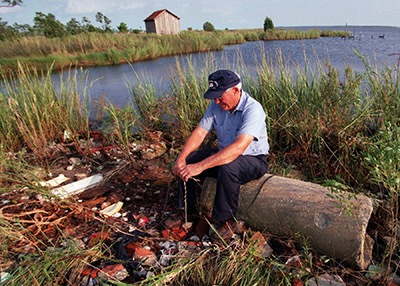
William Odell Spain near his family’s homeplace on Goose Creek Island, 1998. From my story “Odell Spain: My Way of Life” that appeared in the Raleigh News & Observer, Sept. 13, 1998. Photo by Chris Seward. Courtesy, The News & Observer
In memory, William Odell Spain (1931-2026)
WORKING IN THE FISH HOUSE
By William Odell Spain
I see a lot of our young people today walking along the road, and most of them will tell you there is nothing much to do around here. There may be a lot of truth in what they say, but I can tell you it wasn’t that way when I was growing up here.
There was plenty to do! A lot of times, I didn’t want to do it. Sometimes, Mama had to use a little “persuasion” to get me moving.
We had chickens, hogs, a cow, and a mule called Old Bill. All the animals needed to be fed; the cow had to be milked twice a day. I guess by the time I didn’t need a diaper anymore, I was feeding-up and gathering the eggs while Mama milked the cow.
We would shuck corn and take an old hand corn sheller and shell the corn off the cob until we had enough for the next feeding. Then, off to the barn loft to get hay for the cow and Old Bill to eat during the day.
… this was the good part.
You could see for miles around. All the land that could be farmed was farmed, and I can tell you, this was the part I didn’t like.
I know how to chop corn and cotton using a hoe, doing a row at a time. I was never known to be a first-class cotton picker; everybody else could pick two hundred pounds a day. I was lucky if I got twenty-five pounds.
I also knew how to gather corn using an old mule and cart. I knew at an early age that I didn’t want any part of farming, but I loved to fish.
I know now that living here, we didn’t know much about the outside world back then. If we visited other people who lived fairly close, we walked; we would hook up Old Bill to the cart to go longer distances.
If we were going to other communities, we would walk to the boat landing and use the boat.
World War II was going on and all the young men had been drafted, leaving only the old men and us schoolboys here. The farmers were really in need of help and they needed help at the fish houses at the bridge here too.
This is where a bunch of us boys went.
This was a new experience for all of us. There were a bunch of black men working there; I mean some big men, including Clyde Smith [and] his brother Dallas. They were handling 300-pound blocks of ice like most people handle a loaf of bread.
[Clyde Smith was the father of NFL nose tackle Doug Smith.]
Others included Otis Gibbs, Major and Jimmie Jarvis, John Johnson, Willie Jennette, James Jones, and others who have slipped my mind, except for Louis Credle, the “Mouth of the South.”
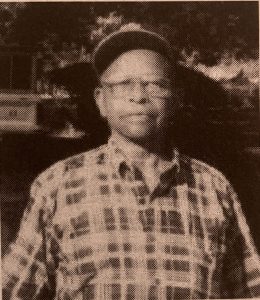
John Johnson, Pamlico County, N.C. From William Odell Spain, Cap’n Dell’s Stories
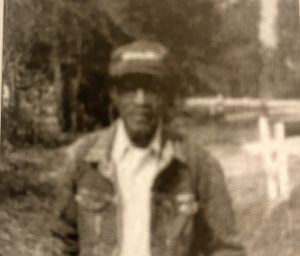
Otis Gibbs, Pamlico County, N.C., ca. 2000. From William Odell Spain, Cap’n Dell’s Stories
I’m sure he could out talk Eddie Murphy anytime. He never met a stranger and you could always tell where he was working because you could hear him.
They were all hardworking men who did everything from icing the boats to loading the trucks, stacking those 120-pound boxes of fish six high in those trucks.
I, along with the other boys, was not sure this was the place to be, but Capt. Ralph Mayo and Capt. Roland Styron told us they had a job for us, so we went to work.
They had me dragging fish from the people who were culling them to the man who was weighing, icing, and packing them into the boxes– about 60 pounds at a time.
This beat cotton picking, and the money wasn’t bad either.
Some days, when a lot of fish were caught, we would work late into the night.
As we worked and learned, we got to do different jobs, so I think we fitted in pretty well. It was a fairly big work force.
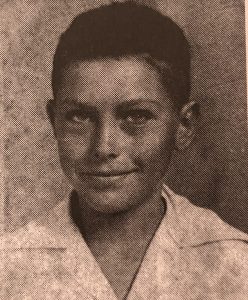
James Hopkins was one of the other boys at the fish house during World War II. From William Odell Spain, Cap’n Dell’s Stories
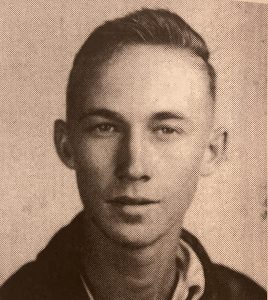
Fred Mason also worked with Odell at the fish house in those days. From William Odell Spain, Cap’n Dell’s Stories
As we worked, the fish dealers would stand around waiting to get their trucks loaded. There was money in every pocket, and I mean rolls of money.
After a while, we would see them arranging fish boxes in a circle with one on its side. We knew there was going to be a poker game getting underway.
Everybody who wasn’t working would be watching the game or playing if they could afford it.
They played for big money too. On days when there were delays in the run boats coming in with the fish, there would be two games going on: the fish dealers would have their own game, betting anywhere from one to five dollars, and our game, where we would be bettong one to five cents.
Sometimes, it took us longer to play a hand than it took the others; it could take a while for Major or Otis to make up their minds to raise the bet to two cents or not.
If the fish dealers dropped a coin on the dock and it went through the cracks, it broke our game up.
If it was a quarter or 50-cent piece, we looked like wharf rats going over the side and underneath the dock to plow around in the mud, water, and fish scales, looking for the money!
Sometimes we found it, and sometimes we didn’t, but you can believe we were all wet and muddy and didn’t smell too good either.
Then it was time to go swimming– clothes and all– and swim until the boat came in.
One day I went into the water so fast, I forgot to give somebody my wallet to hold, and lost it.
Somewhere, there is a wallet in the water around here with two crisp “Silver Certificate” one-dollar bills inside it.
I’m not going to tell you where I lost it, because somebody just may go looking for it. I plan to go looking myself when I get time.
Who knows? I just may find it (but the dollar bills won’t be so crisp any more).
I enjoyed working in the fish house. I met lots of folks and we have remained good friends through the years. It is one of the times in my life I don’t want to forget.

This is an excerpt from William Odell Spain’s book Cap’n Dell’s Stories, which was first published in 2002.
Odell passed away on July 28 this year. Ever since then, I’ve been trying to think how I might remember him here. I thought republishing a tale from Cap’n Dell’s Stories, now out of print, might be a good way to do it.
Odell was born in Hobucken, a village on Goose Creek Island, in Pamlico County, N.C., in 1931.
He made his living as a fisherman when he was young. When fishing played out, he worked many years for Texas-Gulf, the big phosphate mining company in Aurora.
Odell was a gifted storyteller and musician– and the keeper of Goose Creek Island’s history.
He was also just a good soul.
Odell’s first cousin Sarah Tyler was one of my mother’s closest friends. Twenty-five or 30 years ago, Sarah told me that I should go to Goose Creek Island and spend a day with Odell– and I was glad I did.
I will miss him.

